
 Business License

Cross-Cut vs. Micro-Cut Shredders: Security Levels, Particle Size, and Cost Comparison
A German office supplies importer approached us a while back with a product line problem. Their shredder range consisted almost entirely of strip-cut machines, and corporate customers were pushing back because data protection requirements in their market had tightened. The importer needed a cross-cut option quickly, and later a micro-cut tier for finance and legal clients, but they had no framework for deciding how many security levels to stock.
The confusion is common. Shredder categories look similar from the outside, yet the cutting mechanism drives everything: security level, blade life, motor power, noise, and retail price. This article compares cross-cut and micro-cut shredders across the dimensions that matter to importers and brand owners, and provides a practical basis for building a shredder product line.
1. Why the Cutting Type Matters More Than the Brand
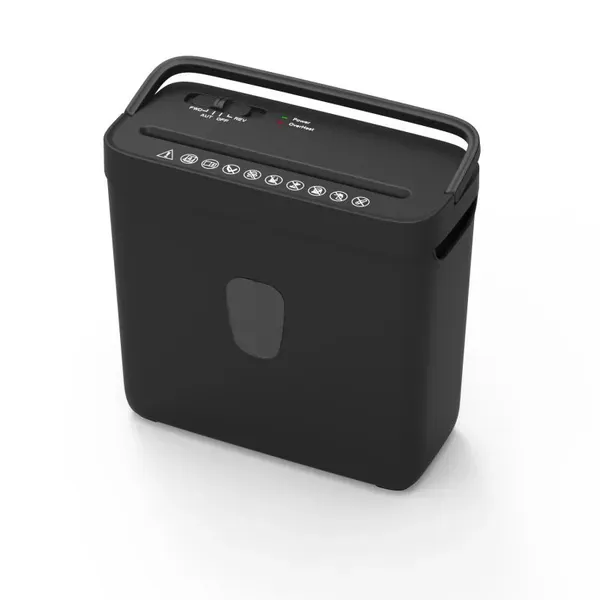
The cutting mechanism is the heart of a shredder, and it determines almost every specification a buyer will quote. Strip-cut machines slice paper into long ribbons. Cross-cut machines use interlocking blades that cut both directions, producing small rectangles. Micro-cut machines are cross-cut designs with a much finer blade matrix, producing particles small enough to defeat most reconstruction attempts.
Retail positioning follows the mechanism. Strip-cut machines occupy the low-price tier, cross-cut dominates mid-range office sales, and micro-cut sits at the premium end. A distributor that understands this ladder can build a catalog that captures customers at every budget level rather than competing on price within one tier.
Dongguan Jiaxi Office Equipment Co., Ltd. has manufactured shredders since its founding in 2011, and the factory in Dongguan, China currently produces strip-cut, cross-cut, and micro-cut machines across roughly 14 active shredder SKUs. That range ships to more than 30 countries through both branded retail and OEM channels.
The choice also affects consumables and service. Finer blades wear faster, generate more dust, and demand more motor power per sheet. That means a micro-cut machine costs more to build, more to maintain, and earns a higher margin—but only if the buyer understands the trade-off and prices accordingly.
2. How Cross-Cut and Micro-Cut Shredders Actually Work
Both cross-cut and micro-cut shredders use the same core architecture. A feed mechanism pulls paper between two counter-rotating cutter shafts, each fitted with a stack of hardened steel blades separated by spacers. The blades interlock like gears, slicing the paper into narrow strips on the first pass and then cutting those strips into rectangles as the paper moves through the matrix.
The difference is blade pitch. Cross-cut machines typically use blade-and-spacer sets that produce particles of roughly 4 × 40 mm, while micro-cut machines use finer pitches that produce particles of roughly 2 × 15 mm or smaller. Smaller particles require more cutting edges per shaft, which increases manufacturing cost and machining precision.
Motor and gearbox requirements scale with cutting fineness. A cross-cut machine rated for 10 sheets per pass needs a motor that can handle the drag of two cutting directions. A micro-cut machine rated for the same sheet capacity needs roughly 30% more torque because the finer matrix presents more cutting resistance per sheet. This is why the same nominal sheet capacity sells at different prices across the two categories.
3. Cross-Cut Shredders: The Office Workhorse
Cross-cut shredders are the default choice for general office data protection. Their particles, typically in the range of 4 × 40 mm to 4 × 35 mm, meet the security requirements of most corporate document handling and comply with common data protection guidance for internal documents.
The practical advantages are clear. Cross-cut machines shred faster per sheet than micro-cut models because the coarser matrix offers less resistance. They accept more sheets per pass, typically 8 to 12 sheets for desktop models, which keeps small teams productive. Their blades last longer, and the machines are noticeably quieter than micro-cut equivalents.
The trade-off is security ceiling. A determined attacker can reconstruct cross-cut particles from sensitive documents given enough time and resources. For invoices, contracts, and internal memos, that risk is acceptable for most organizations. For medical records, financial statements, and legal files, it is not.
4. Micro-Cut Shredders: When Particle Size Becomes Critical
Micro-cut shredders reduce documents to particles typically measuring 2 × 15 mm or 1 × 10 mm. At these sizes, manual reconstruction becomes impractical, which is why micro-cut machines are the standard recommendation for organizations handling regulated personal data, healthcare records, and financial information.
Regulatory pressure has been the main driver of micro-cut demand. Privacy laws in the European Union and other regions require organizations to destroy personal data in a way that makes recovery practically impossible. Many compliance frameworks explicitly reference high-security shredding, which has pushed corporate buyers toward P-4 and above classifications. In response, manufacturers such as Dongguan Jiaxi Office Equipment have refined blade tolerances and motor tuning specifically for the P-5 tier.
The cost of this security appears in three places. Micro-cut blades cost more to manufacture because of the finer pitch and tighter tolerances. The motor must be stronger, adding weight and energy consumption. And fine particles produce more dust, which means more frequent cleaning and slightly shorter blade life in heavy use.
5. DIN 66399 Security Levels: The Comparison Framework
To compare cross-cut and micro-cut machines objectively, buyers should use the DIN 66399 standard, which classifies shredders into security levels P-1 through P-7 based on particle size and shape. The table below summarizes the levels most relevant to office and corporate products:
| Security Level | Typical Particle Size | Particle Area | Typical Use |
|---|---|---|---|
| P-3 | 4 × 80 mm or equivalent | ≤ 320 mm² | General office documents |
| P-4 | 4 × 40 mm | ≤ 160 mm² | Confidential corporate documents |
| P-5 | 2 × 15 mm | ≤ 30 mm² | Personal data, financial records |
| P-6 | 2 × 6 mm or 1 × 10 mm | ≤ 10 mm² | High-security documents |
| P-7 | 0.8 × 5 mm or equivalent | ≤ 5 mm² | Classified and intelligence material |
Cross-cut machines typically deliver P-3 to P-4 security. Micro-cut machines deliver P-5 and above. This mapping is the first filter in any sourcing decision: identify the security level your market demands, then select the machine category that meets it, rather than starting from brand or price.
6. Throughput, Capacity, and Duty Cycle Compared
Real-world productivity differs from the spec sheet because duty cycle determines how long a machine can run before overheating. Cross-cut desktop models typically run continuously for roughly 10 to 20 minutes, while micro-cut models with heavier motors often manage similar or longer runtimes despite the extra cutting resistance.
Sheet capacity tells only part of the story. A machine rated at 10 sheets per pass shreds roughly 10 sheets in a single feed, but real documents vary in paper weight and the presence of staples or clips. Cross-cut machines handle these variations more forgivingly; micro-cut machines are more sensitive to paper weight and require more careful feeding.
For high-volume environments, throughput matters more than any single rating. A cross-cut machine processing 8 sheets per pass at 2.5 m/min handles roughly 40 to 50 sheets per minute in practice. A micro-cut machine at the same speed processes fewer sheets per pass, typically 5 to 8, which means longer queue times for the same daily volume. Organizations that shred constantly may need a larger micro-cut machine rather than a desktop unit.
7. Cost Comparison: Machine Price, Blades, and Maintenance
Total cost of ownership spans the purchase price, blade replacement, and maintenance over the machine's service life. The table below lays out the typical differences at the desktop tier:
| Cost Factor | Cross-Cut | Micro-Cut |
|---|---|---|
| Retail price (desktop) | US$40–US$150 | US$80–US$300 |
| Sheet capacity (typical) | 8–12 sheets | 5–8 sheets |
| Blade life (mixed paper) | roughly 20,000–30,000 sheets | roughly 12,000–20,000 sheets |
| Noise level | 55–62 dB | 58–68 dB |
| Dust generation | Low | Moderate |
Blade replacement is the largest long-term cost in commercial use. A cross-cut blade cassette for a mid-range machine typically costs roughly US$25 to US$50, while micro-cut cassettes run 30% to 50% higher because of the finer machining. Buyers should confirm that spare cassettes are available for every model they stock, because a shredder without a replacement blade supply is a one-time sale rather than a product line. JACC, for example, keeps replacement cassettes in stock for every shredder model in its active line.
We have seen this calculation play out in practice with a North American distributor who added one micro-cut SKU to a shredder range that had been cross-cut only. The micro-cut model accounted for roughly 18% of shredder units but close to 30% of shredder revenue within a year, because the higher price point and the corporate demand for P-5 compliance supported the margin.
8. Noise, Dust, and Office Fit
Office environment fit is a purchasing factor that rarely appears on spec sheets but consistently surfaces in user feedback. Noise is the most noticeable difference. Cross-cut machines run at roughly 55 to 62 dB, comparable to a normal conversation. Micro-cut machines run 3 to 6 dB louder, which in a quiet open office is clearly audible.
Dust behavior also differs. Fine cutting produces more paper dust, which settles on surfaces around the machine and requires more frequent bin emptying. Micro-cut bins fill faster per sheet because the particles pack more tightly, which means the waste bin fills in roughly half the time of a cross-cut machine at the same volume.
Some time ago, an office products buyer in the Netherlands reported that their corporate clients were choosing cross-cut models for open-plan floors and micro-cut models for private offices and back offices. The pattern reflects a practical compromise between security level and workplace comfort, and it is worth mirroring in a balanced product catalog.
9. How to Structure a Shredder Product Line
A profitable shredder line usually follows a simple three-tier structure. The entry tier is a strip-cut or basic cross-cut machine for home offices and small businesses. The middle tier is a cross-cut machine at P-3 to P-4 with 8 to 12 sheet capacity for general corporate use. The top tier is a micro-cut machine at P-5 for compliance-sensitive customers.
Each tier serves a distinct buyer with distinct priorities. Price dominates the entry tier, throughput and reliability dominate the middle, and security classification dominates the top. Marketing materials and listings should speak to those priorities separately rather than presenting all three machines with the same feature list.
Importers should also plan blade and bin availability across the line. Spare cassettes for the two best-selling models, plus branded shredder oil or lubricant sheets, turn a one-time appliance sale into an ongoing consumables relationship. Distributors who build this structure typically see shredders become a stable, repeatable revenue category rather than a seasonal one. Jiaxi Office Equipment structures its OEM shredder program around this three-tier ladder, so distributors can specify models at each security level without redesigning their catalog.
10. Frequently Asked Questions
10.1. Is a micro-cut shredder always better than a cross-cut one?
Not necessarily. A micro-cut machine provides a higher security level, but it shreds fewer sheets per pass, costs more, wears blades faster, and runs louder. For general internal documents, cross-cut at P-3 or P-4 is sufficient and more economical. Micro-cut becomes the right choice when documents contain personal data, financial details, or other information covered by privacy regulations or internal security policies.
10.2. Can a cross-cut shredder be upgraded to micro-cut later?
No. The cutting matrix is machined into the blade set and matched to the motor, gearbox, and housing. Swapping the cassette does not convert a cross-cut machine into a micro-cut one, because the finer blades demand more torque than the motor was designed to deliver. Upgrading security level means replacing the machine, which is why buyers should assess their security requirements before purchasing rather than after.
10.3. How long do shredder blades actually last?
Blade life depends on paper quality, usage intensity, and maintenance. A cross-cut blade set processing mixed office paper typically lasts roughly 20,000 to 30,000 sheets, while a micro-cut set lasts roughly 12,000 to 20,000 sheets. Regular lubrication with shredder oil and prompt removal of staples reduce premature wear. Machines in continuous commercial use should have blade cassettes inspected at least twice a year.
Cross-cut and micro-cut shredders serve different security tiers, and the difference is quantifiable through the DIN 66399 classification. Distributors who map their product line to these levels, and who stock the consumables that support them, build a category that serves both the budget buyer and the compliance-driven customer.
Recently Posted
-
Quality Control in Office Equipment Manufacturing: From Incoming Materials to Final Inspection
September 4, 2026A buyer for a European retail chain once told us that he could predict a factory's output quality from a single question: can Read More
 -
Laminators in Education: Protecting Teaching Materials and Classroom Resources
September 4, 2026An educational supplies distributor in Poland told us a while back that laminators had become one of their steadiest sellers. Scho Read More
 -
Understanding Laminator Specifications: Speed (mm/min), Temperature Range, and Film Thickness
September 3, 2026An importer we have worked with for several years once ordered a batch of laminators based entirely on a retail description that e Read More
 -
Pouch Laminators 101: What Every Office Equipment Buyer Should Know
September 2, 2026An office supplies distributor we work with in the United Kingdom made a simple observation a while back. Their customers kept ask Read More

Contact Us
Recommended Products
-
 Premium 9.5-inch A4 Pouch Laminator Machine 1 Minute Warm-up High Speed Laminating Machine With NTC IDLM034US$ 8.00 - 10.80MOQ: 1000 Pieces
 -
Premium 4-roller Pouch Laminator A3 13-inch High Speed Thermal Laminating Machine 1 Min Warm-up Office Hot Lamination (LM341B)US$ 32.00 - 34.00MOQ: 500 Pieces
-
Premium A3 13" Pouch Laminator One Minute Warm-Up High Speed Thermal Laminating Machine Machine Max 150 Microns IDLM024US$ 11.80 - 13.90MOQ: 1000 Pieces
-
Premium Discbound Binder Hole Puncher Disc Binding Machine Mushroom Hole Punch Arc Binder Discbound Planner IDBM011US$ 19.00 - 28.00MOQ: 1000 Pieces
-
Premium 12-heet Comb Binding Machine Documnet Binding Machine Plastic Comb Binder Paper Binding Machine (CB12)US$ 11.50 - 13.80MOQ: 500 Pieces
-
Premium Spiral Coil Binding Machine 4:1 5:1 6mm Encuadernadoras Espiral Encadernacao Espiral Madeira (SB10)US$ 19.00 - 24.00MOQ: 500 Pieces
-
Premium 12 Inches A4 Thermal Binding Machine Hot Binding Machine Thermal Binder for Thermal Binding Covers (TB200)US$ 8.00 - 19.50MOQ: 500 Pieces
-
JACC 2-in-1 A3 & A4 Thermal Binding Machine 13\" Laminator &12\" Book Binding Machine IDLM037 Electric PowerUS$ 15.00 - 25.00MOQ: 500 Pieces
-
Premium 8 Sheets 21 19 Hole Comb Binding Machine Document Binding Machine Note Book Binding Machine (CB8)US$ 8.00 - 10.30MOQ: 500 Pieces
-
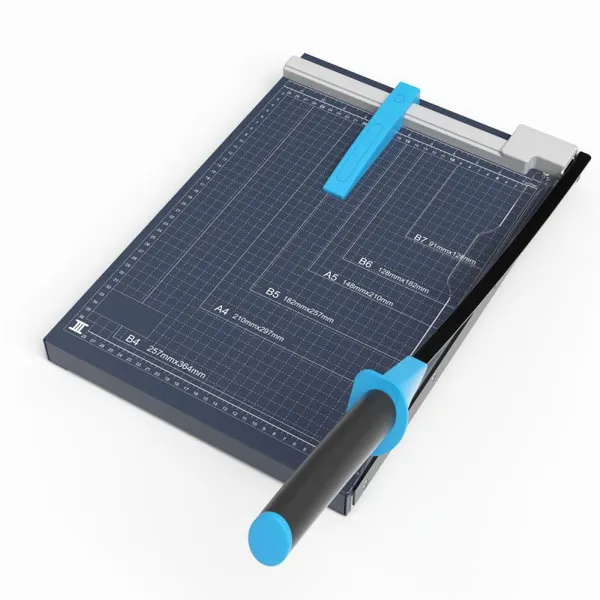
Premium Paper Cutter B4 15 Inch Paper Trimmer Machine Manual Paper Guillotine Machine Metal Baseplate (GL410B)US$ 8.20 - 9.50MOQ: 1000 Pieces
-
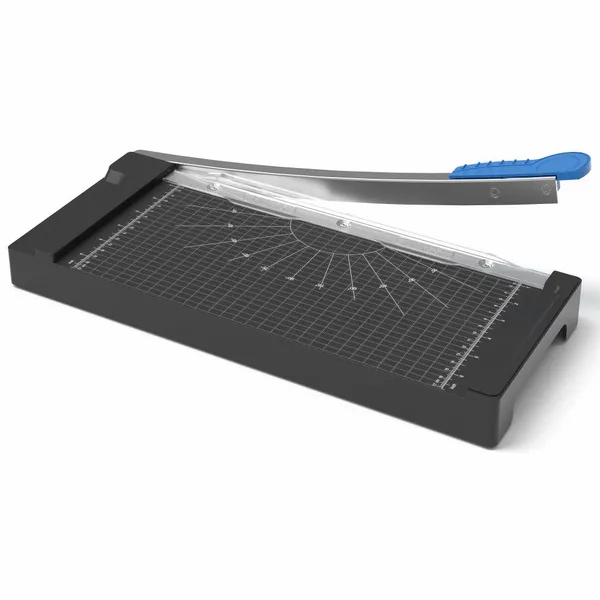
A4 Size GL408 Paper Guillotine Cutter – Compact Design for Office, Photo & Card CuttingUS$ 5.5MOQ: 1000 Pieces
-
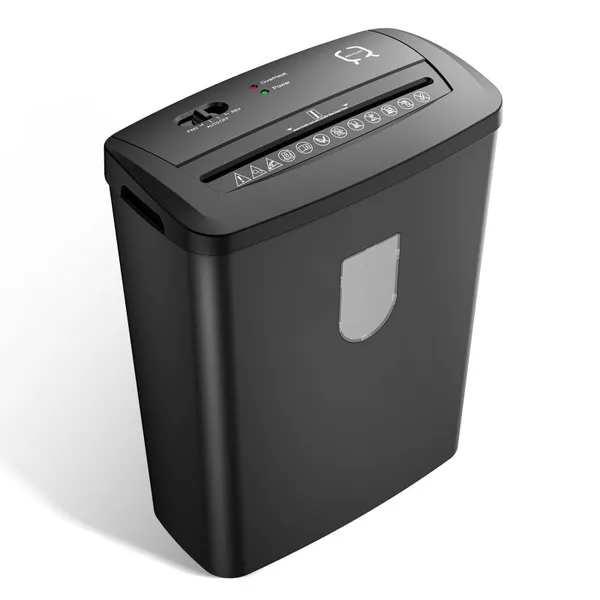
Premium 14L 8 Sheets Cross Cut Paper Shredder Machine Document Shredding Machine Home Office Shredder IDPS004US$ 15.99 - 17.90MOQ: 500 Pieces
-
Premium 11L 6 Sheets Cross Cut Paper Shredder Machine Document Shredding Machine Home Office Shredder IDPS003US$ 12.50 - 14.00MOQ: 500 Pieces
-
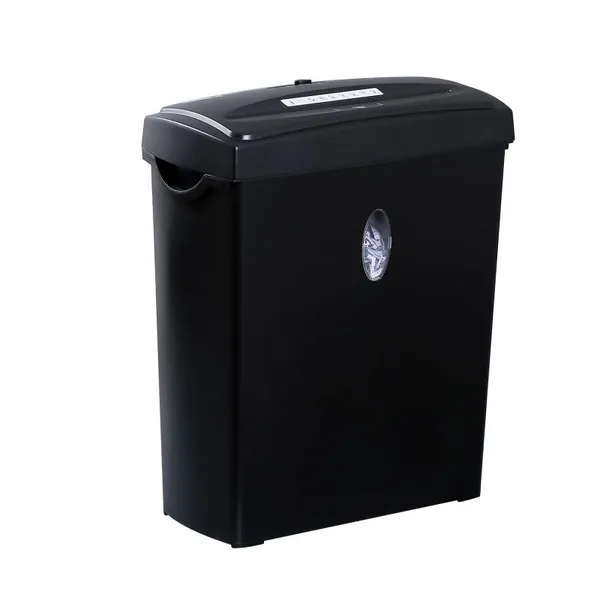
Premium 7L Home Office Paper Shredder 6 Sheets Strip Cut Document Shredding Machine IDPS002 With Electric Power SourceUS$ 7.99 - 8.88MOQ: 500 Pieces
-
Premium 8L 4 Sheets Cross Cut Paper Shredder Machine Document Shredding Machine Office Shredder IDPS001US$ 9.50 - 10.50MOQ: 500 Pieces
-
Premium Portable Food Vacuum Sealer Machine With Rechargeable Li-ion Battery Food Saver for Sous Vide (FVS0351Li)US$ 8.10 - 8.90MOQ: 1000 Units
-
Premium Handheld Vacuum Sealer Mini Vacuum Pump for Reusable Vacuum Zipper Bags and Food Storage Containers (HVS3501)US$ 2.99 - 3.90MOQ: 2000 Units
-
Premium Food Vacuum Sealer Machine Food Saver Vacuum Preservation and Sealing Machine With Hose for Sous Vide (FVS2201)US$ 7.00 - 8.90MOQ: 1000 Units
-
Food Vacuum Sealer Machine Dual Heat Sealing Lines With Bag Cutter Double Seal Strip for Airtight Moist Food Storage (VS6)US$ 12.00 - 13.50MOQ: 1000 Units
-
Premium Portable Handheld Mini Vacuum Sealer Pump USB Rechargeable Air Suction Pump Vacuum Wine Jar Sealer IDFVS018US$ 4.50 - 5.10MOQ: 1000 Units